


 0
0
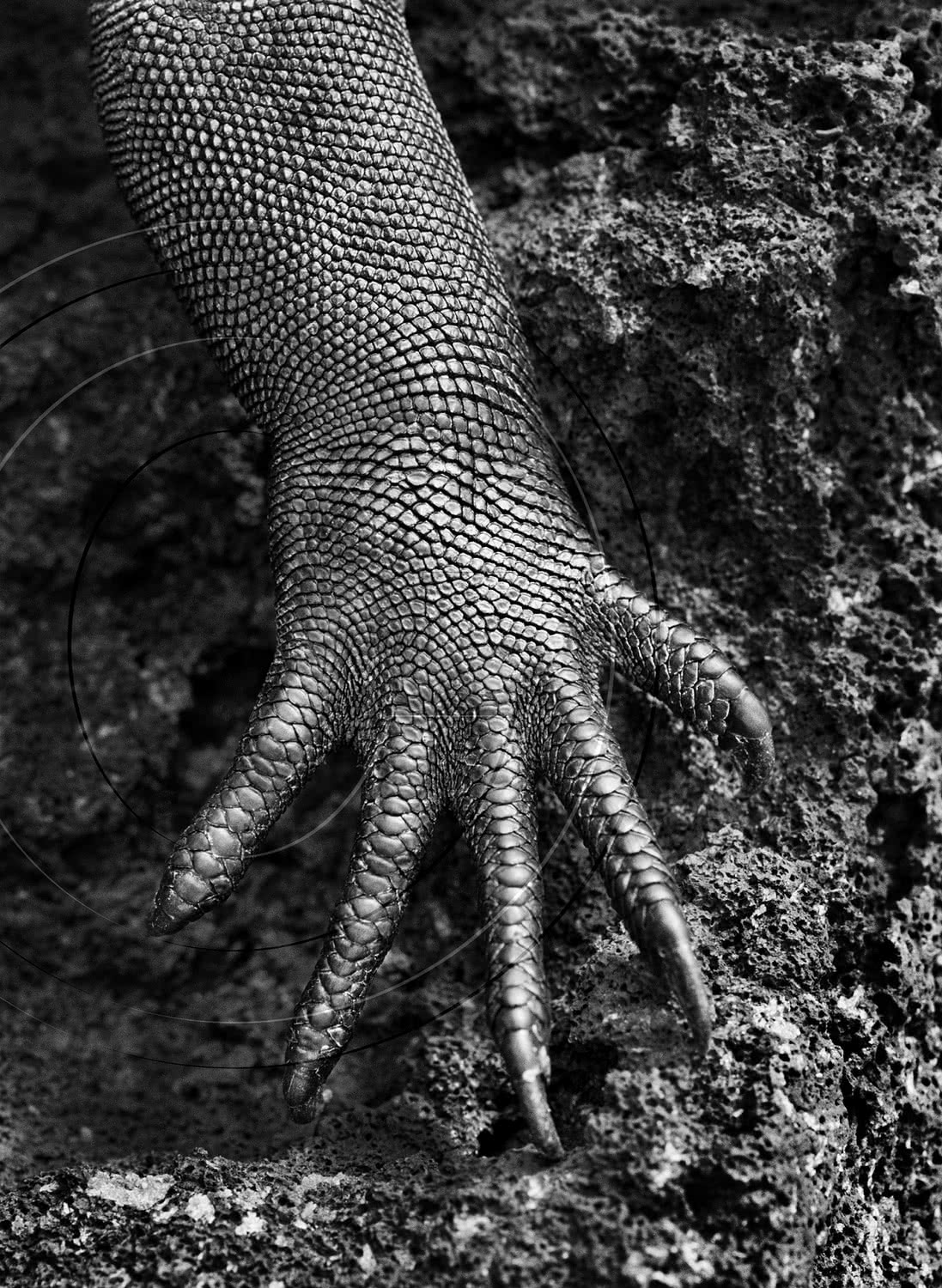
Marine iguana (Amblyrhynchus cristatus). This animal is a perfect example of adaptation and evolution. The first marine iguanas apparently came to the archipelago from the American mainland, almost 620 miles (1,000 kilometers) to the east. They were probably transported by sea currents atop tree trunks, pieces of land with foliage and other objects floating on the
water and, once here, they were forced to adapt to local conditions. A smaller number of these migrants remained land iguanas and can be found on only a few islands, but the majority evolved into ma-rine animals: they learned to swim, to feed on seaweed, to dive and to remain submerged for long stretches; they even developed special glands to excrete excess salt from their food intake. It is the only type of iguana in the world able to live in salty waters. Galápagos. Ecuador. January, February and March 2004